Rejoice Tapon
Where I'm From
I don't know exactly when or where I was born—sometime in 1992, somewhere near the borders of Cameroon, Nigeria, and Chad. I grew up in the Sahel without plumbing, electricity, or much of a safety net. My father died when I was nine. My mother died a year after I left home alone at thirteen—my conversion to Christianity had made staying too dangerous.
I spent my early teenage years moving between Chad, Cameroon, and Nigeria. I was orphaned by fourteen. I never finished high school thanks to Boko Haram disrupting my studies.
Somewhere in that childhood, I got fascinated by witch doctors—the healers in my village who treated people with potions and incantations. I watched them fail my parents. I decided, standing at their graves, that I'd become a better one. I just didn't yet know that "better witch doctor" would eventually translate to "surgeon."
Becoming Rejoice
Binta is the Muslim name I was born with. Rejoice is the name I chose for myself at thirteen, the same year I left home. I like what it says about how I've chosen to move through the world since.
Becoming Doc
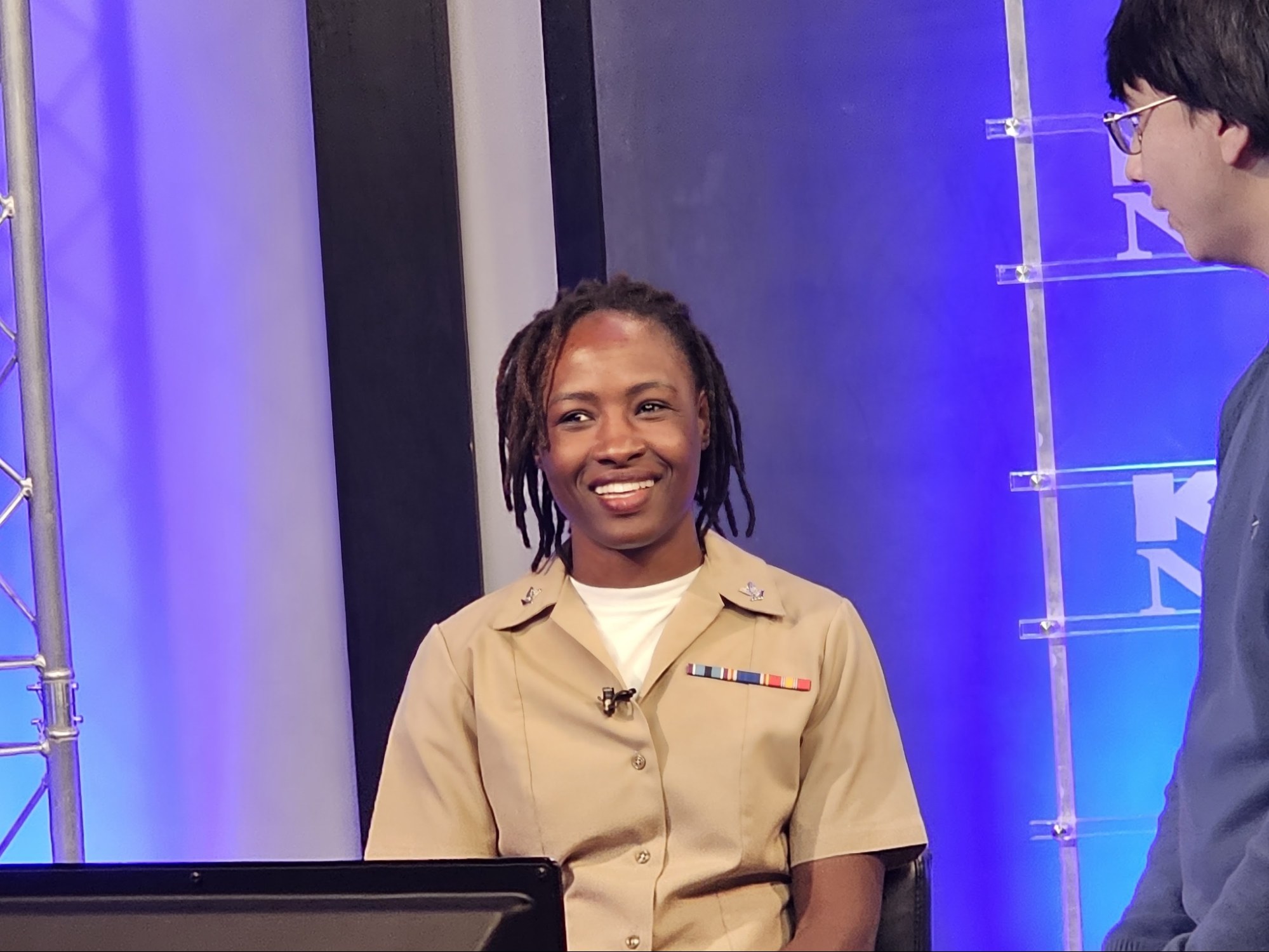
I arrived in the United States at 26, functionally illiterate in math and science, having never heard of World War II. I earned my GED, which opened the door to community colleges. I joined the Navy as a Hospital Corpsman to test whether medicine under real pressure was actually what I wanted. It was.
I've deployed twice: once aboard the world's largest hospital ship on an international humanitarian mission, and once as the sole medical provider embedded with an infantry platoon during a combat Marine Expeditionary Unit deployment. Marines don't hand out the nickname "Doc" lightly. I've kept it.
During a live-fire training exercise, a stray round struck my head. I spent six days in the hospital, still concussed—then took a Chemistry II exam two days after release. I got a 92% and ultimately, an A in the course.
What's Next
I'm finishing my pre-med prerequisites with a 3.83 GPA across four California community colleges, and transferring to complete a bachelor's degree on the pre-med track. Medical school is next, then a surgical residency—ideally cardiothoracic. Somewhere in there, I plan to volunteer with Médecins Sans Frontières. If a physician had made it to my village when I was a child, my parents might still be alive. I'd like to be that physician for someone else, someday.
I speak English, French, Hausa, Fulfulde, and Kanuri. I still swim poorly, which remains a running joke among the fellow Saharans I grew up with—most of us can't.
Languages
~1992 · Africa's Sahel
Sometime in 1992, I'm born around the Cameroon–Nigeria–Chad border region.
Age 9 & Age 13 · Loss and Displacement
My father dies when I'm nine. At thirteen, I leave home and choose the name Rejoice for myself, in place of Binta, the Muslim name I was born with; my mother dies the following year. Orphaned by fourteen. Boko Haram disrupted my education several times.
Age 26 · Arrival in the USA
I arrive with poor writing & math skills. I study to earn my GED.
2020 · Join the U.S. Navy
I become a Hospital Corpsman with 1st Battalion, 7th Marines, 1st Marine Division.
2020–Present · Two Deployments
(1) Humanitarian mission aboard the USNS Mercy, a hospital ship; (2) Embedded in the 31st Marine Expeditionary Unit ground combat element as the sole medical provider for an infantry platoon.
2020–Present · Pre-Med, 3.83 GPA
Coursework across five California community colleges, transferring Fall 2027.
See the full military and academic record.
Education, service history, awards, and clinical skills — laid out in detail.